Lara Djonggrang | La Bihzad | Shanghai Blue | News | Contact | Home 


Imperial Treasure

  The food is based on royal journeys made by King Hayam Wuruk, who ruled the kingdom of Majapahit in the 14th century.
 

The voice of an old woman with a thick Javanese accent calls out, "Pecel, mister? Pecel for lunch?" Then the stubby figure comes into view. Her kebaya and kain resemble those of the many women in Indonesian flea markets who sell food in baskets they carry above their heads.

As one approaches her, one finds out the price of the pecel. Seeing the disappointment on the face of her potential customer, she says: "You can bargain, mister. How much do you want to pay? Or do you want to barter? Do you have apples or bananas with you? Or maybe even your phone?" And as she breaks into a wide smile, showing her old teeth and thinking her joke is very funny, one can't help wondering: `I can bargain at a fine dining restaurant, and pay with apples?".

"Yes, you definitely can," confirms Annette Anhar, the person who came up with the concept of Lara Djonggrang, "It's the whole idea of the restaurant. We want people who come here to experience what normally happens in flea markets in Indonesia ." Annette notes that she `imported' the pecel seller straight from a village in Java, adding: "She seems to enjoy being here a lot. I think she's happy to be in Jakarta :"


The section of Lara Djonggrang where the old woman is posted is called Pasar Trowu­lan. The food she sells differs daily and so does the asking price for it. Says Annette: "Yesterday, she was selling food for Rp 35,000. Today, it's Rp 25,000. I let her decide the price herself."

Owned by Tugu Hotels Group-which has hotels in Bali and Java, and also the Peranakan restaurant Dapur Babah in Jakarta -the theme of Lara Djonggrang and La Bihzad Lounge is imperial Indonesian cuisine.

Lara Djonggrang was a princess in the kingdom of Prambanan whose father was killed by a warrior named Bandung Bondowoso. Blinded by her beauty, Bandung , who was the son of King Prabu Baka, fell madly in love with her and decided to marry her.

The princess did all she could to prevent herself from being married to the man who killed her beloved father. She insisted that Bandung build 1,000 temples for her in just one night. To complete this task, Bandung sought help from hundreds of night demons.


As dawn approached, Lara Djonggrang asked her maids to pound rice in the barns and scatter fragrant flowers. The sound of the pound ing woke the roosters, which then began to crow. When the demons heard the roosters and smelled the flowers, they thought day had come and fled. They had built only 999 temples.

The enraged Bandung then turned Lara Djonggrang into a stone statue. The story of Lara Djonggrang lives on, symbolising a daughter's undying love for her father. The complex of the 999 temples and the statue of Lara Djonggrang is known today as Candi Prambanan, one of the wonders of Indonesia .

"I want to remind people of ancient Indonesian history," says Annette who is respon­sible for the restaurant's day-to-day operations. "Many people have forgotten the story of Lara Djonggrang and yet it is one of the most inspir­ing legends we have."


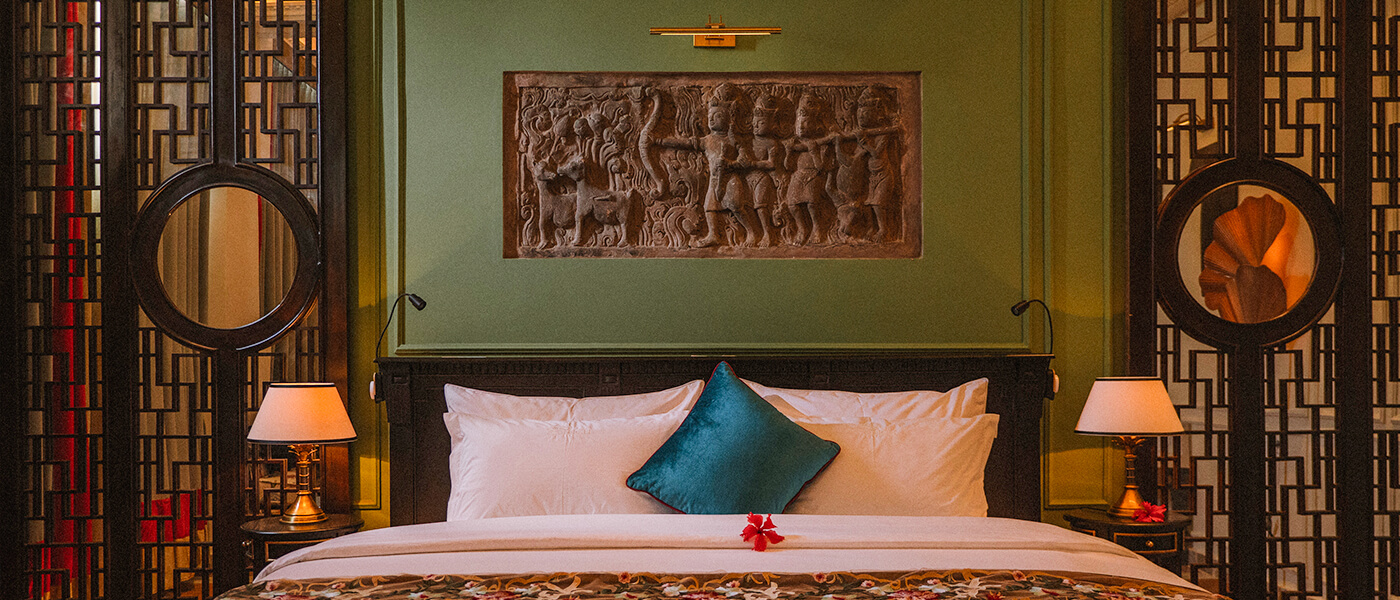
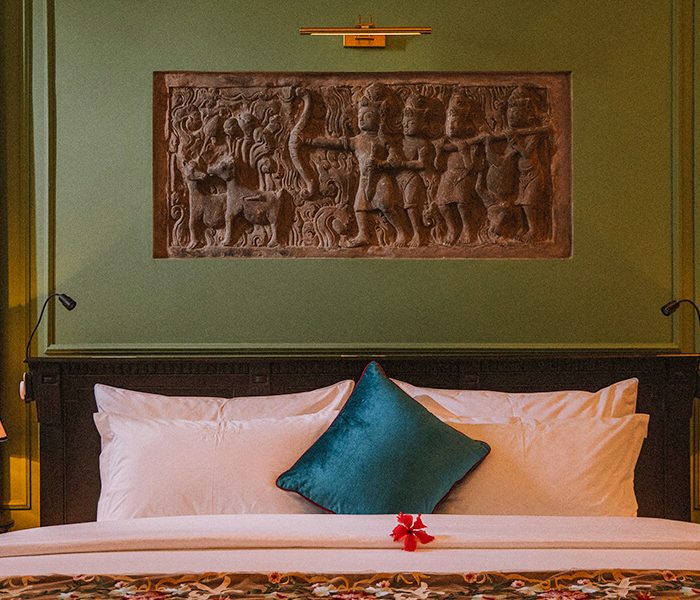
Like Dapur Babah, Lara Djonggrang is a restaurant-cum-museum. A large antique statue of Lara Djonggrang stands in a wine lounge near Pasar Trowulan. Indeed, the lounge is full of antiques, including statues big and small, and wall ornaments.

The attention to detail is impressive. Even the ceilings and tiles are antique. "My father (Anhar Setjadibrata, the proprietor of Tugu Hotels Group) collected old tiles from the houses in villages that were demolished because of highway construction," says Annette. "They turned out to be really handy"

She goes on: "As soon as I told my father knew that the theme of the restaurant was the story of Lara Djonggrang, he knew exactly which pieces to put in." Construction of the restau­rant took only four months, with Anhar as the architect. "If we move a statue just a little, he'll notice," says Annette.

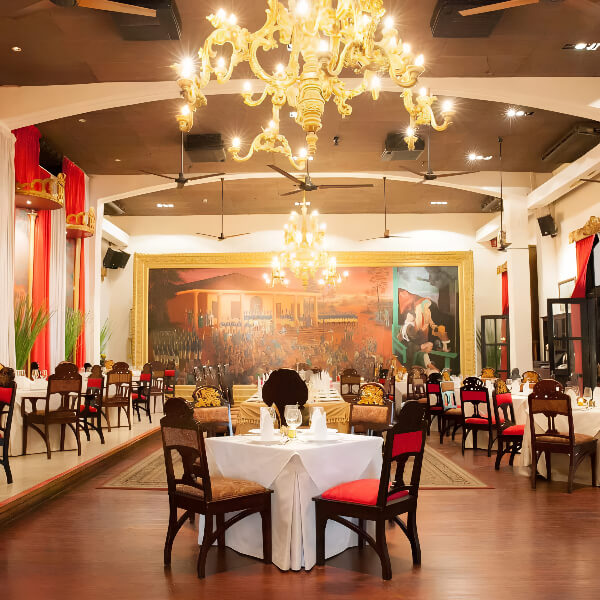
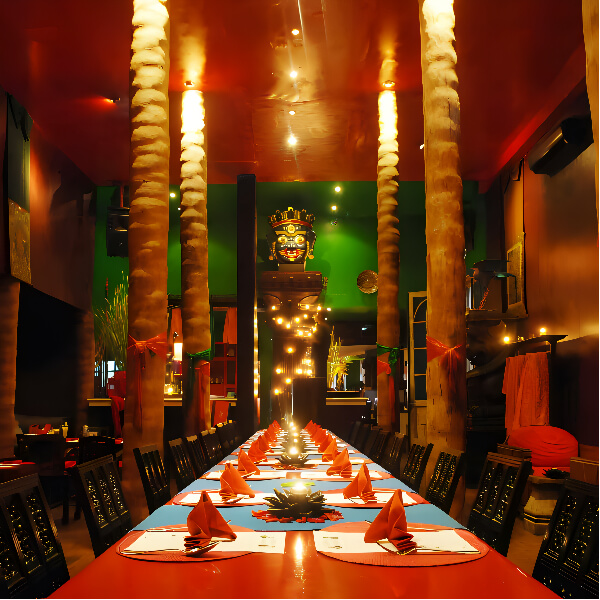
The restaurant's main dining area is called China Blue. It not only represents imperial Indo­nesia , but also has pieces from other Asian cul­tures, including statues of Buddha.

Also part of China Blue are three pri­vate rooms with different themes. One of these is dedicated to the late President Soekarno. The other rooms represent the Tugu Hotels in Bali and Malang . Each can accommodate up to 10 persons.


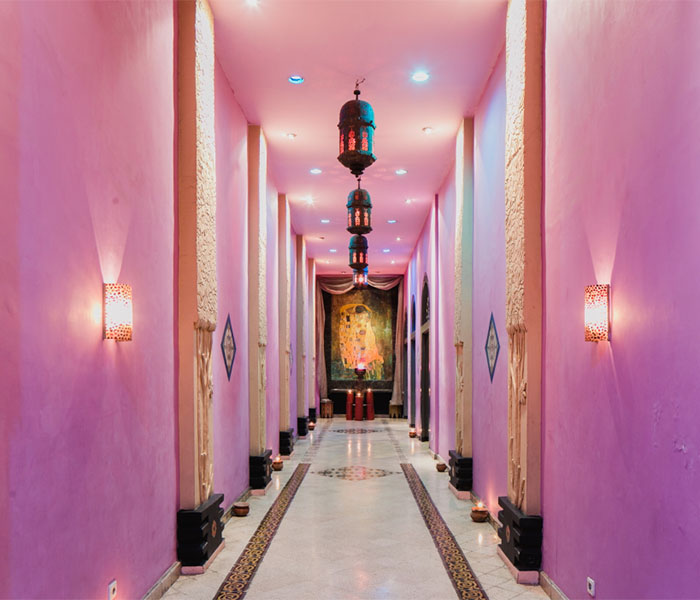
The La Bihzad Lounge is accessed through a classical back garden, complete with a small pool. At the entrance, one is greeted with the line: `To the Memory of Bihzad. Herat . Afghani­stan .' Dedicated to Persia 's greatest painter, the lounge has a strong Middle Eastern theme. On the far left side is a private room for up to 20 guests. The lounge menu is neverending, listing more than 300 choices.

The food served at Lara Djonggrang is also a result of thorough research. It is based on royal journeys made by King Hayam Wuruk, who ruled the Kingdom of Majapahit in the 14th century. "Because each journey took some 10 months to complete, the imperial cooks used the ingredients they could get from the local vil­lages," says Annette. "It's interesting to see how imperial cuisine mixed with the local food:" Recommended appetisers include Udang Swarloka and Tahu Kembang Jenar. The former is crispy minced shrimp balls served with palm chilli sauce at Rp 38,000. The latter is crispy tofu skin stuffed with fresh mushrooms, bean sprouts and young bamboo shoots at Rp 28,000.
 

Soto Kikil Curubaya, a speciality of Surabaya , is oxtail soup served with coriander, ginger and paprika, complete with candlenut sambal and lime. An exotic satay dish from Bali , Sate Lilit Ikan Gianyar, is minced Balinese fish satay marinated and grilled in tropical spices and served with sambal matah. These dishes are priced at Rp 35,000 each.

The second half of the menu is inspired by cuisine from the coastal port cities in Indo­nesia that lay along the Silk Route. "My mother (Wedya Julianti) is responsible for the food," says Annette She was also behind the menu at Dapur Babah."

Recommended dishes include Pasar Nelayan KampongTugu, which is inspired by the tradition of feasting by fishermen after a few suc cessful days of fishing. Ample for two persons, it consists of grilled or steamed fresh prawns, cock­les, squids, green mussels, swimming crab and fresh catch of the day. It is priced at Rp 278,000 with fresh lobster and Rp 168,000 without.

Nasi Campur enthusiasts will enjoy Nasi Brongkos Demak from Central Java , Nasi Cheroboam from Cirebon , Nasi Kapau from Padang , Nasi Jagung Ma'Haji from Madura, and many more. There are eight different kinds of Indonesian crisps, from squid to clam. Seven sambals are available, from sambal tuktuk, made of salted fish and baby eggplant, to clam sambal.

Two must-try deserts at Lara Djonggrang are KolakTegal Ayem and Serabi Pandan Wangi Sore. The former is sliced taco, banana and sugar palm fruit, simmered in warm fragrant of coco­nut soup (Rp 28,000). The latter is traditional coconut pancake with sliced banana and sweet coconut soup (Rp 35,000).


Mocktails complement an extensive selection of wines and cocktails. Morning Misty in Pandan Forest is a refreshing sweet drink at Rp 35 > 000. Other mocktails include The Tears of Lonely Rara Mendut, Red Face of Great Khan, First Love at Canggu Beach and The Last Sunset at Black Sea .

Located on the busiest street of Menteng, Central Jakarta , it is difficult to miss this extraor­dinary restaurant-not least because of the huge 300-year-old willow tree in the front yard. One knows one is near this restaurant full of authentic antiques when one's hair starts standing up.


Lara Djonggrang & La Bihzad Bar
Jl Teuku Cik Di Tiro 4, Jakarta Pusat - Indonesia
Tel: +62 (21) 315-3252, Fax: +62 (21) 316 0488

laradjonggrang@tuguhotels.com
www.tuguhotels.com


Back to top
       
     
Back to top