|
|
In the beginning of the 20th century, a vessel coming from Shanghai harbored the port of Soenda Kelapa in Batavia (now known as Jakarta ), marking the beginning of a new history.
On this vessel there was a Shanghainese sailor called Nko Mo
San. His origins were not clear, but as in the case of
his predecessors, the Chinese settlers who landed in the
islands of Indonesia through hundreds of years earlier,
Nko Mo San was ready to start a new page and find a better
life. He became a construction worker, started his family
in Batavia and had a son called Chan Mo Sang.
|
|
| |
As a young man, Chan Mo Sang got married to a local woman
called Siti Zaenab. Seeing the crowded Soenda Kelapa port
at that time, with the little money they had, Chan Mo Sang
and Siti Zaenab decided to open a little warong (warong is
a very simple, rustic semi-open streetside eatery with minimal
construction) at the harbor to earn their living. The little
warong started by only selling tea and groceries, but because
of the couple's warm familiar hospitality and great bargain
prices, their customers became very loyal to them. The warong
was called Shanghai Tea House – as shown by a sign hung outside
of the warong facade, sponsored by one of the local cigarette
companies of the time.
|
Soon, the warong became overcrowded with locals and foreigners
alike. In evenings, the warong was the meeting place
of flocks of sailors, pirates, merchants, and local
girls. Everytime they earned enough money, little by
little Chan Mo Sang and Siti Zaenab renovated their
little warong into a nicer space. Their loyal customers
were more than happy to help - everytime they returned
from their sea voyages, they brought the couple something
to hang or decorate their warong with. The warong continued
to grow, and more services were added. It had a tailor,
a shoe repairer, and a barber. Anything sailors needed
help with, it could be arranged through the warong.
From dusk till dawn, the warong was full with sailors,
young and old, some dancing in big groups and others
with their island lovers. Customers played musical instruments
in turns with local bands. At times, jazz bands played
romantic Shanghai songs there, bringing nostalgic memories
of the Chinese sailors' home. Sometimes they played
swing and chansons from the West, as well as traditional
village folk songs. Drinks were always plenty, and the
atmosphere was filled with loud chatters, yells and
laughter. Siti Zaenab, in charge of the kitchen, was
busy preparing Babah Homecooking recipes she learnt
from her mother in law, as well as local homecooking
Batavian dishes she knew from her own family. |
|
|
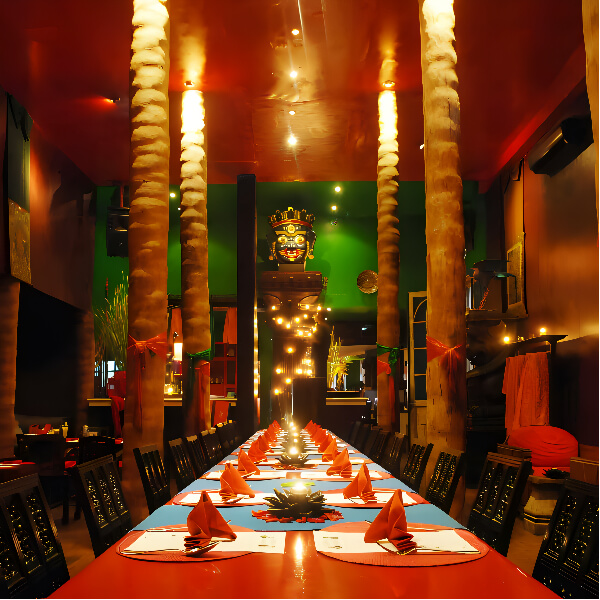
Some time after the era of Chan Mo Sang and Siti Zaenab,
the warong was closed down. The beneficiary of the warong
saved all the building elements and all the contents of Chan
Mo Sang and Siti Zaenab's original Shanghai Tea House, and
stored it in a warehouse in Jakarta 's old town. Fate brought
these to the owner of Tugu Hotels Group, who brought back
to life the original Shanghai Tea House at Hotel Tugu Malang
and the other half in Central Jakarta now – called the Warong
Shanghai Blue 1920.
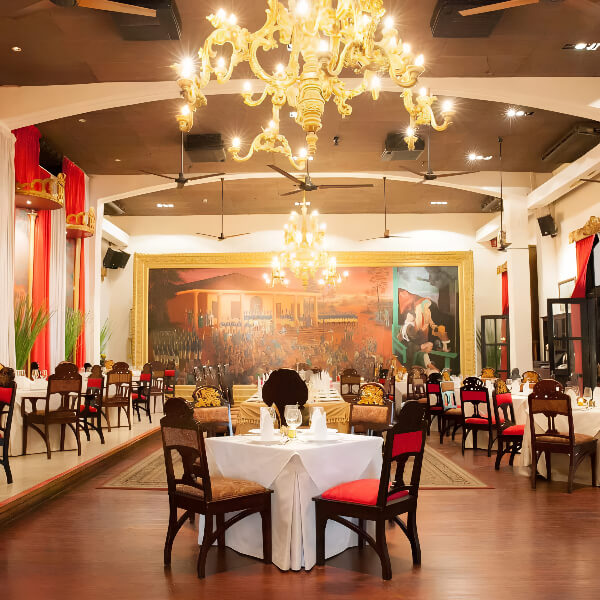
Chan Mo Sang and Siti Zaenab in Soenda Kelapa may no longer be there, however Warong Shanghai Blue 1920 has fully come back to life, where drinks will always be plenty, where delicious homecooking, great times, and life will be celebrated to the fullest.
|
|