Shanghai Blue 1920 | Samarra | News | Contact | Home 


Blue Heaven

Jakartans are hard to please when it comes to new restaurants. But Tugu Hotels Group's new concept eatery, Warong Shanghai Blue 1920, is quite unique and difficult to fault, writes Unggul Hermanto.


When Nko Mo San sailed from Shanghai to Batavia at the end of the 19th century, he brought the dream of a better life with him. With his son, Chan Mao Sang, and his Betawinese wife, Sid Zaenab, he opened a humble warong, or outdoor semi-rustic eatery, called Shanghai Teahouse.

A combination of hard work, culinary excellence and friendliness made the business grow. The small teahouse developed into an all-in-one stop for sailors to Batavia 's old port of Sunda Kelapa . 'Me teahouse provided dancing, drinks and Shanghai and Babah Peranakan (Chinese-Betawinese) dishes.

There was also a small barber shop, a tailor and a shoe repairer. Word in the area was that everything a sailor needed could be arranged through the Shanghai Teahouse which kept growing to become an icon of the old port of Jakarta .

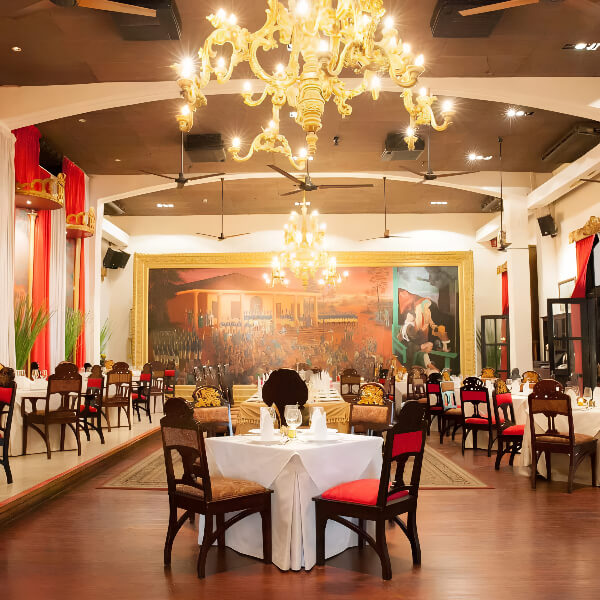
Shanghai Blue 1920's main dining area


The economic and political changes in the area over the years forced the once popular warong to close down, however. Many Decades later came Warong Shanghai 1920 at Hotel Tugu Malang, where many of the remains of the original warong were

used as integral parts of the decor. Now, the Tugu Hotels Group has brought the spirit of Shanghai Teahouse back to the city where it started, Jakarta.

Warong Shanghai Blue 1920 and Tugu Hotels' other new restaurant, Samarra Pasar Sate and Wine, took up to 10 months to complete. "We had to reconstruct the whole building, from the foundations up," said Annette Anhar, who manages the group's restaurants for her father, Anhar Setjadibrata. "Unlike Lara Djonggrang (in Menteng), which is more formal, Shanghai Blue is a fun, colourful restaurant.

Shanghai Blue's walls are anything but blue. They are part orange, red and golden brown-reminiscent of the walls of restaurants in Shanghai in the 1920s, when the city was the biggest financial centre in East Asia . Art deco, which swept across the globe in the 1920s and 1930s, dominates the interior. The wooden chairs are painted in many colours and featureflower carvings.

Some of the dining tables are round, and some are square and covered with glass. In one part of the I 100-seater main dining area is a stage where bands play jazzy tunes. Behind the stage is a wall decorated with 1920s- paintings of flowers,. On the other side are many framed drawings of Shanghai girls during the era.

The restaurant opens daily for lunch and dinner. "We make sure lunch service is quick," said Annette. "It shouldn't take much longer than hour because we know that customers' lunch breaks are normally short In the evening, of course, the concept is more towards leisurely fine dining."


The dessert bar is located across from the front door. Various Betawinese and Babah Peranakan desserts-including jenang grendol jahe, bubur ketan hitam, bubur pulut waluh, bubur prokot, jenang sengkolo, serabi pandan wangi, pisang goreng rujak manis-are available.

Behind the bar are three shelves. Two of these are decorated with drawings and pictures of Shanghai , while on the middle shelf and on along table are some big Chinese cookie jars. On the red wall are two paintings of Shanghai in the 1920s.

Said Annette: "We wanted to show that Shanghai was already modern and that people dressed very formally back then. As a busy on city, Shanghai was influenced by many different cultures and nationalities."

The side entrance is through a tall wooden twin door with Chinese art deco-style carvings. Near it are two antique barber chairs from the original Shanghai Teahouse. Further on is a lounge area where tables are surrounded by some very comfortable 1920s sofas and small wooden stools.


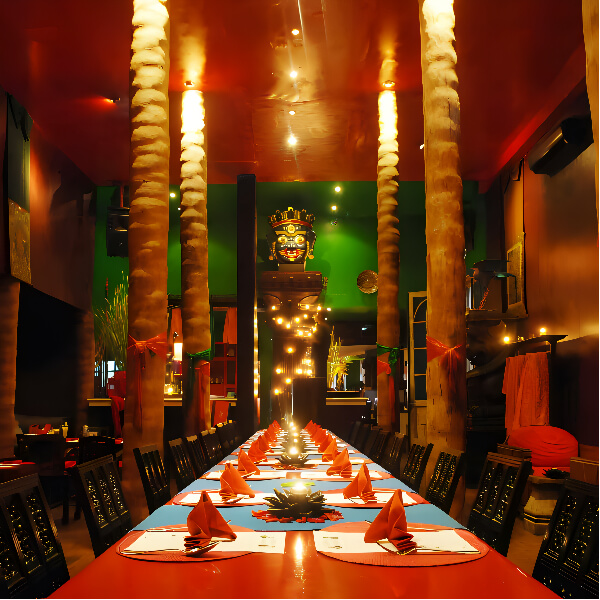
The ceiling is black and the lamps are covered with red paper lanterns. Everything inside the restaurant seems to be saying that the word blue does not always mean sadness, but can also mean that all is well in life-and that having fun is important.

The private dining room is upstairs on the third floor. This 30- dining area is named The Opium Room and is decorated with an authentic opium bed and pipes. Black and white framed photos tell the story of the Opium Era in Shanghai and Indonesia .

Shanghai Blue aims to promote traditional Indonesian food. "We have fun Betawinese fun, Babah Peranakan dishes, traditional Shanghai cuisine, seafood dishes, because the original warong was near Sunda Kelapa, and all kinds of steamed delicacies," said Annette.

Rijsttafel Meikwei-Meikwei (roasted duck, fried crispy eel, marinated Chinese beef, tofu, salted egg and salted Chinese cabbage served with steamed rice) deserves a try at Rp 60,000, as does Shanghai Blue-style roasted duck served with spiced salt and hoisin sauce at Rp 77,000.

There are various kinds of steamed vegetables to choose from. Also, a number of fully researched and well-prepared delicacies from the past include a "Drunken Menu" of drunken mussels, crabs, prawns and lobsters. On top of all this comes Mekwei Mekwei Wo Ai Ni (Rose Rose I Love You), a very refreshing mocktail whose name is inspired by a Shanghai pop song of the 1920s.

 
INSIDE THE RESTAURANT SEEMS TO BE SAYING THAT THE WORD BLUE DOES NOT ALWAYS MEAN SADNESS, BUT CAN ALSO MEAN THAT ALL IS WELL IN LIFE-AND THAT HAVING FUN IS IMPORTANT.


Back to top